Table of Contents
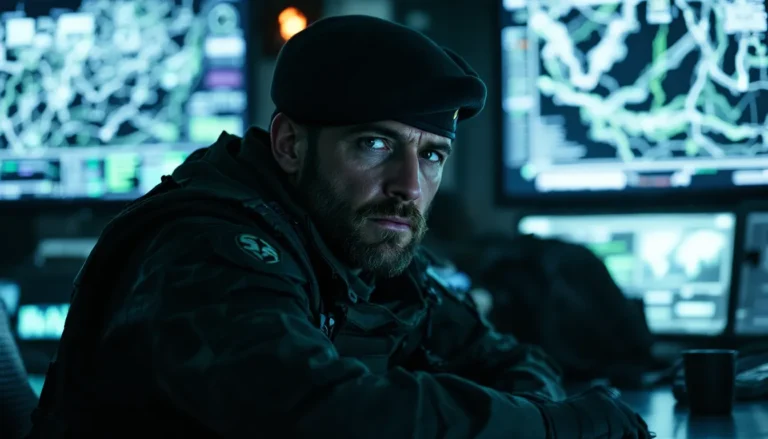
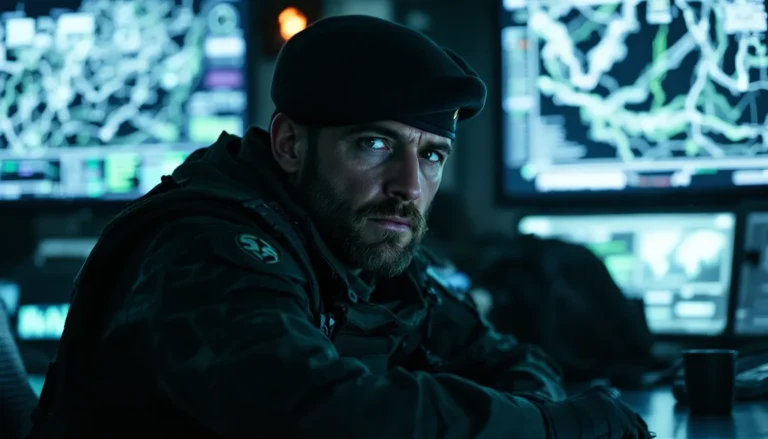
ToggleFew antagonists in gaming history have left a mark as deep as Vladimir Makarov. From his explosive debut in Modern Warfare 2 to his ruthless reign across multiple timelines, Makarov has defined what it means to be a truly memorable villain in the Call of Duty franchise. His name alone carries weight, players who lived through the original MW2 campaign still remember the shock and awe of his presence. Whether you’re a campaign junkie reliving the story or a competitive player curious about the lore shaping the franchise, understanding Makarov and his evolution across Call of Duty is essential. He’s not just a antagonist: he’s the driving force behind some of gaming’s most jaw-dropping moments.
Key Takeaways
- Vladimir Makarov evolved from a shadowy puppet master in Modern Warfare 2 to a directly confrontational global threat, defining Call of Duty’s narrative ambitions through complex, believable antagonism rather than generic villainy.
- Makarov’s coherent philosophy rooted in realpolitik and cynicism makes him dangerous not through raw power alone, but through his ability to exploit moral ambiguities and systemic weaknesses in international structures.
- The Makarov Call of Duty rebooted timeline introduced a younger, more tactically flexible version that maintains his core traits—strategic brilliance and ruthlessness—while adapting to modern mercenary operations and plausible deniability.
- Makarov’s game-changing plot twists, including orchestrating betrayals that pit superpowers against each other, reshape how players understand campaign events and reward subsequent playthroughs with deeper narrative comprehension.
- Makarov’s influence extends beyond campaign storytelling into competitive multiplayer, where his philosophy of tactical efficiency, map control, and strategic adaptation directly mirrors principles that separate average players from competitive-level operators.
- His enduring legacy across multiple timelines and games demonstrates that Call of Duty’s most iconic villain transcends typical FPS archetypes, cementing his place as one of gaming’s most memorable antagonists.
Who Is Makarov And Why He Matters To Call Of Duty Fans
Vladimir Makarov is the primary antagonist of the Modern Warfare subseries, a brilliant strategist and terrorist mastermind whose influence stretches across multiple Call of Duty timelines. He’s not a soldier following orders, he’s a visionary bent on reshaping global geopolitics through chaos and unconventional warfare. What makes Makarov different from typical FPS villains is his believability. He operates with calculated precision, combining mercenary brutality with political acumen. For Call of Duty fans, Makarov represents the franchise’s evolution toward complex, morally ambiguous storytelling where the lines between protagonist and antagonist blur.
His importance to the franchise can’t be overstated. Makarov single-handedly elevated the Modern Warfare campaigns from military shooters to geopolitical thrillers. Players didn’t just fight him: they became invested in understanding his endgame. The structure of MW2’s campaign, with Makarov pulling strings from behind the scenes, introduced a narrative complexity that influenced how future Call of Duty games approached storytelling. Every decision he makes ripples across the campaign, affecting which characters survive and which nations fall into conflict. That level of narrative weight makes him legendary among series enthusiasts.
Makarov’s Rise As A Villain Across The Franchise
Modern Warfare 2: The Introduction Of An Unforgettable Antagonist
Makarov’s first appearance in Modern Warfare 2 (2009) established him as a force to be reckoned with. Though players only encounter him briefly in the campaign, his shadow looms over every mission. He orchestrates a false-flag terrorist attack on a Russian airport, a horrifying moment that kills hundreds of civilians and serves as the catalyst for everything that follows. This wasn’t a grunt or a disposable commander: this was a long-term strategist executing a plan with surgical precision. The genius of MW2’s narrative lies in how Makarov uses American soldiers (through Makarov’s sleeper agent, Makarov) to manipulate both sides of a global conflict.
What made his introduction so impactful was the shock factor combined with tangible consequences. The campaign’s narrative doesn’t coddle players with exposition dumps. Instead, you piece together who Makarov is through mission debriefings, intel, and the escalating chaos around you. By the time you realize the scope of his influence, it’s nearly too late. His presence felt genuinely threatening, not just because of his resources but because of his intelligence. Players weren’t just fighting a villain: they were playing chess against a grandmaster.
Modern Warfare 3: Escalation And Global Conflict
Modern Warfare 3 (2011) shifted Makarov from puppet master to front-and-center threat. Now openly leading the Ultranationalist movement, he escalates his campaign from destabilizing individual nations to threatening global peace. The game opens with Makarov’s forces launching coordinated attacks worldwide, forcing multiple nations into a state of war. This escalation felt natural given MW2’s setup, but MW3 made him more personal, more direct.
The campaign’s structure positions Makarov as the endgame prize. Throughout MW3, Task Force 141 and allied forces hunt him across multiple continents. Unlike MW2, where much of his scheming remained mysterious, MW3 reveals more of his ideology. He genuinely believes Western intervention destabilizes the world and that only through controlled chaos can a new, stronger order emerge. It’s a horrifying philosophy, but it’s coherent enough to make him a compelling antagonist rather than a mustache-twirling cartoon villain. By MW3’s finale, the confrontation with Makarov feels earned. Players have chased him across Pripyat, infiltrated his bases, and watched countless soldiers fall in pursuit of stopping him.
Modern Warfare Series Return: Makarov’s Evolution In Rebooted Timelines
When Infinity Ward rebooted the Modern Warfare series starting with Modern Warfare (2019), fans wondered: would Makarov return? The answer was a resounding yes, but with a twist. The rebooted timeline introduced a younger, arguably even more ruthless version of Makarov who operates with different resources and different alliances. This version isn’t building on the legacy of previous Ultranationalist movements: he’s creating something entirely new.
In Modern Warfare II (2022), Makarov emerges as a more measured but equally dangerous threat. He’s older, more experienced, and running a mercenary operation (Shadow Company/Makarov’s Army) that operates outside traditional military structures. What’s striking about this iteration is how he’s evolved tactically. Instead of relying solely on ideology, rebooted Makarov understands that modern conflict requires operational flexibility. He hires elite soldiers, maintains plausible deniability, and operates through cutouts and intermediaries.
The rebooted timeline allows for fresh storytelling while maintaining the character’s core traits, strategic brilliance, ruthlessness, and a vision for a reordered world. Rather than retreading MW2’s plot, Infinity Ward crafted a parallel narrative where Makarov makes different choices, encounters different factions, and pursues different objectives. For players, it meant experiencing his threat in a new context where previous knowledge of his schemes didn’t guarantee mission success. The developers understood that simply recycling MW2 wouldn’t capture modern audiences: instead, they evolved him. His presence in Modern Warfare II’s campaign proved that Makarov’s appeal transcends any single game or era.
Character Development And Motivations Behind The Mastermind
The Philosophy Of Chaos And Terrorism
Makarov’s ideology is central to understanding what makes him dangerous. Unlike terrorists driven purely by hatred or economic desperation, Makarov operates from a coherent (if deeply flawed) worldview. He believes that Western military intervention and economic imperialism destabilize regions, that standing international institutions perpetuate inequality, and that only through destabilization and restructuring can genuine change occur. It’s a philosophy rooted in realpolitik and cynicism, he doesn’t believe in lasting peace, only in the eternal struggle for power.
This philosophical foundation is what elevates him beyond a simple “bad guy.” Players engaging with the campaign experience characters who, even when opposing Makarov, sometimes voice sympathies with fragments of his worldview. No character in the series says Makarov is entirely wrong about everything: instead, they recognize that his methods are monstrous even if his critiques of global power structures contain uncomfortable truths. It’s this moral ambiguity that makes the campaign compelling. You’re not fighting a cartoon villain: you’re fighting someone whose worldview, taken to its logical extreme, leads to atrocity.
Building An Empire: From Mercenary To Global Threat
Makarov’s rise isn’t accidental or sudden. Across the games, we see how he built his network from smaller operations into a global enterprise. In earlier games, he’s positioned as a connected operative, someone with access to resources, trained soldiers, and intelligence networks. By MW3, he commands armies. This progression reflects a careful consolidation of power.
What’s masterfully handled is how the campaign shows his adaptability. When one plan fails, he pivots. When an alliance breaks apart, he finds new partners. This isn’t a villain who relies on a single strategy or a single backer: he’s diversified enough to survive setbacks. His use of mercenaries, separatist movements, and rogue military elements gives him operational flexibility that conventional militaries lack. He moves through the cracks of international law, exploiting gray zones where traditional military doctrine doesn’t apply effectively. By building an empire across multiple games, Makarov transcends being just a campaign antagonist: he becomes a franchise-defining character whose influence shapes gameplay, narrative, and the larger world of Call of Duty itself.
Memorable Makarov Moments And Impact On Campaign Story
Shocking Betrayals And Game-Changing Plot Twists
Some of the most shocking moments in Call of Duty history involve Makarov orchestrating betrayals that reshape the campaign’s trajectory. The most infamous: in Modern Warfare 2, your team is betrayed by General Shepherd, and Makarov’s influence looms over the revelation. The moment when you realize how thoroughly Makarov manipulated both American and Russian forces is genuinely stunning. It’s a betrayal within a betrayal, where Makarov’s long game becomes clear. He didn’t just set up a terrorist incident: he created a scenario where two superpowers would war with each other, all while he consolidated power.
Another critical twist occurs in Modern Warfare 3 when it becomes apparent that Makarov’s network extends into the highest levels of Russian military and government. The campaign forces you to question whether fighting alongside Russian Spetsnaz against other Russian forces makes sense, and the answer is that it does, because Makarov has poisoned the well. He’s installed operatives throughout the system, making trust nearly impossible. These moments aren’t throwaway plot beats: they reshape how players understand the campaign’s events. Subsequent playthroughs hit differently once you understand the full scope of his manipulation.
In Modern Warfare II (2022), the twist that Makarov has deeper connections to Task Force 141 than initially apparent creates tension throughout the campaign. Without spoiling details, players who thought they were building toward a straightforward confrontation discover that Makarov’s plans intersect with the heroes’ motivations in uncomfortable ways. These aren’t cheap shocks: they’re narrative beats grounded in his established character and methods.
Confrontations With Protagonists That Changed The Series
Makarov’s direct confrontations with campaign protagonists, Captain Price, Soap MacTavish, and Task Force 141 operators, define those characters as much as they define him. Price’s obsession with stopping Makarov becomes a consuming drive that nearly costs him everything. Soap’s journey from rookie to hardened soldier is catalyzed by opposing Makarov’s influence. These aren’t just kill-the-boss encounters: they’re culminations of personal vendettas built across multiple games.
The final confrontation in Modern Warfare 3 where Task Force 141 corners Makarov is one of the series’ defining moments. Rather than a typical boss fight, it’s a tense, desperate final push where the player must extract Makarov alive (or ensure his death, depending on campaign choices in newer titles). This design choice reinforces that Makarov isn’t defeated through superior firepower, he’s defeated through superior strategy and sacrifice. Task Force 141 brings everything to bear, and even then, victory comes at a cost. His final moments carry weight because the relationship between hunter and hunted has evolved across multiple games. For new players diving into Modern Warfare II, the campaign’s climax hits differently knowing from veterans that Makarov’s influence extends beyond what initial appearances suggest.
Makarov’s Role In Multiplayer And Competitive Play
How To Master Makarov-Themed Loadouts And Strategies
While Makarov is primarily a campaign villain, his influence permeates competitive Call of Duty through operator skins, cosmetics, and the metagame shaped by his story. Players seeking to embody his ruthlessness and tactical precision can construct loadouts inspired by his character philosophy. Makarov would prioritize efficiency, weapons that eliminate threats quickly, equipment that provides information advantage, and a playstyle focused on map control and resource denial.
For multiplayer success, consider these loadout principles inspired by Makarov’s tactical doctrine:
• Primary Weapon: Use meta assault rifles or submachine guns depending on engagement distances. Makarov values versatile weapons capable of adapting to varied combat scenarios. Modern Warfare II’s M4 platform dominates for good reason, it’s reliable across distances.
• Secondary Equipment: Tactical grenades and lethal grenades align with Makarov’s philosophy of controlling space. Flashbangs disable enemies: Claymores punish predictable rotations. Call of Duty Black emphasizes understanding terrain, something Makarov would exploit ruthlessly.
• Perks & Field Upgrades: Prioritize information advantage. Ghost (hidden from UAVs), Double Time (faster repositioning), and Dead Silence (silent movement) allow you to operate undetected, mirroring Makarov’s tendency to move through systems without detection.
• Playstyle: Avoid reckless aggression. Makarov succeeds through planning and adaptation. Play objectives methodically, control choke points, and force enemies into unfavorable engagements. Patience and reading opponent behavior matter more than raw gunfight skill.
Competitive Call of Duty esports, influenced by the narrative weight Makarov brings to the franchise, values similar principles, map control, team coordination, and strategic positioning. While you won’t see operators directly named Makarov in standard multiplayer rotations across all titles, the cosmetic and operator system in Modern Warfare II and newer titles occasionally features skins and personas aligned with mercenary or Ultranationalist aesthetics. These skins aren’t just cosmetic: they’re a way for players to align themselves with the faction’s philosophy, ruthless, efficient, and uncompromising.
For players interested in competitive excellence, understanding Makarov’s strategic approach translates into multiplayer mastery. His methodology, identifying weaknesses in opponents’ systems, exploiting them systematically, and adapting when conditions change, mirrors what separates average players from competitive-level operators. Recent guides from Dexerto on Call of Duty loadouts and competitive play emphasize similar principles: meta awareness, adaptation, and information control. These aren’t coincidences: they’re natural extensions of the ruthless efficiency Makarov represents.
Conclusion
Makarov’s evolution from a shadowy puppet master in Modern Warfare 2 to a directly confrontational global threat across subsequent games demonstrates how far Call of Duty’s narrative ambitions have expanded. He’s transcended the typical FPS villain archetype, he’s not purely motivated by power, hatred, or ideology alone, but rather a complex amalgamation of strategic thinking, philosophical conviction, and ruthless pragmatism. The fact that Infinity Ward chose to reboot him in a new timeline speaks to his enduring appeal. A character doesn’t get that treatment unless developers recognize they’ve created something special.
For campaign enthusiasts, Makarov represents the golden age when Call of Duty prioritized compelling storytelling alongside explosive action. For competitive players, his philosophy of tactical efficiency and strategic adaptation influences how the multiplayer metagame evolves. Whether you’re analyzing his influence through the lens of narrative design, appreciating his role in shaping franchise lore, or simply enjoying the adrenaline rush of opposing him in campaign missions, Makarov remains gaming’s most iconic villain. As Call of Duty continues evolving, the question remains: will future entries continue exploring his legacy, or have we seen the final chapter of Vladimir Makarov? Given his cultural impact on the franchise and gaming at large, don’t expect developers to abandon one of their greatest creations anytime soon. His influence will persist as long as players are drawn to narratives where ideological conflict and personal vendetta collide across global battlegrounds. Understanding Makarov is understanding what makes modern Call of Duty campaigns matter.